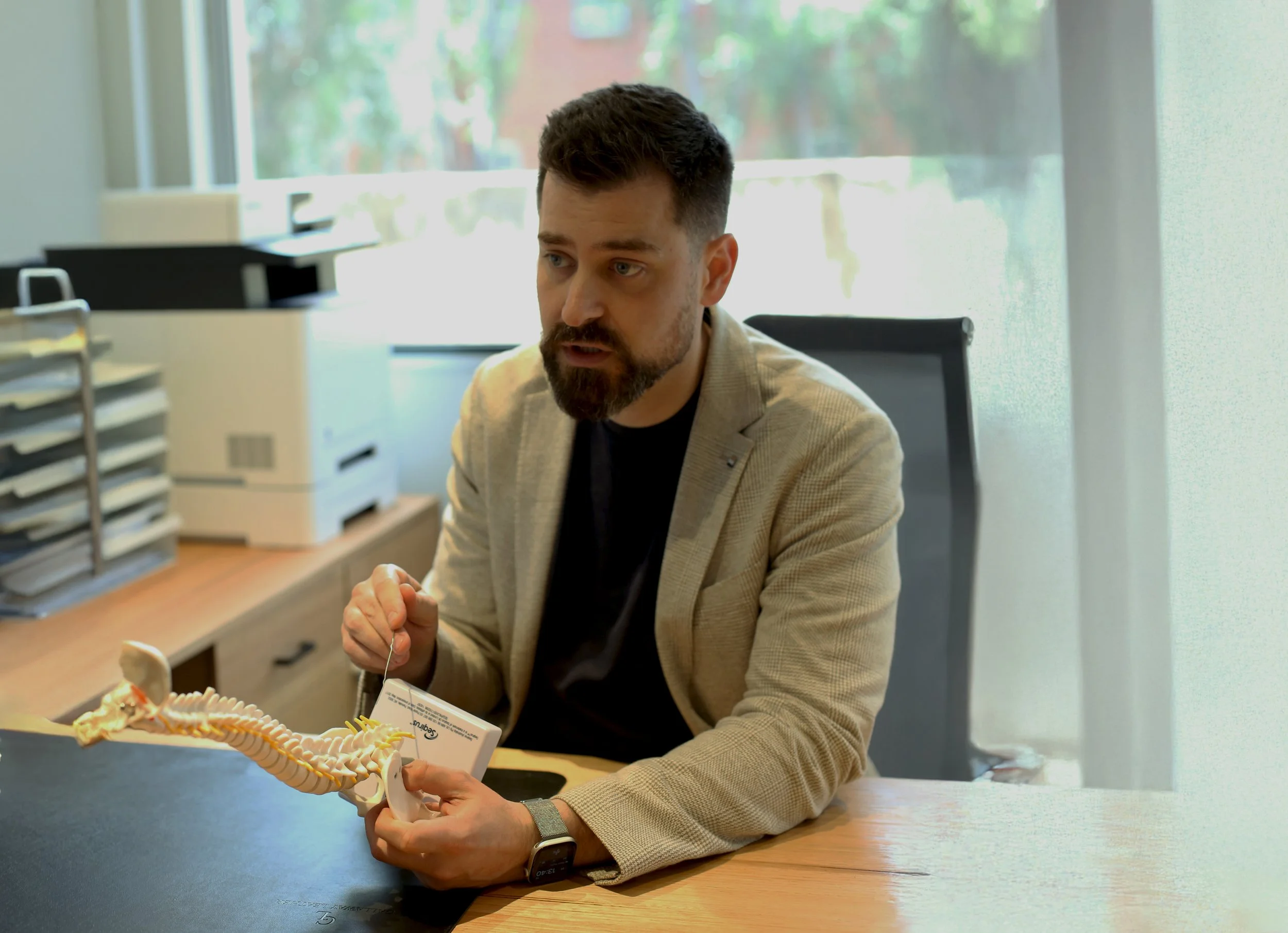
Chronic Low Back Pain: Understanding the Condition, Treatment Options and the Role of Procedures
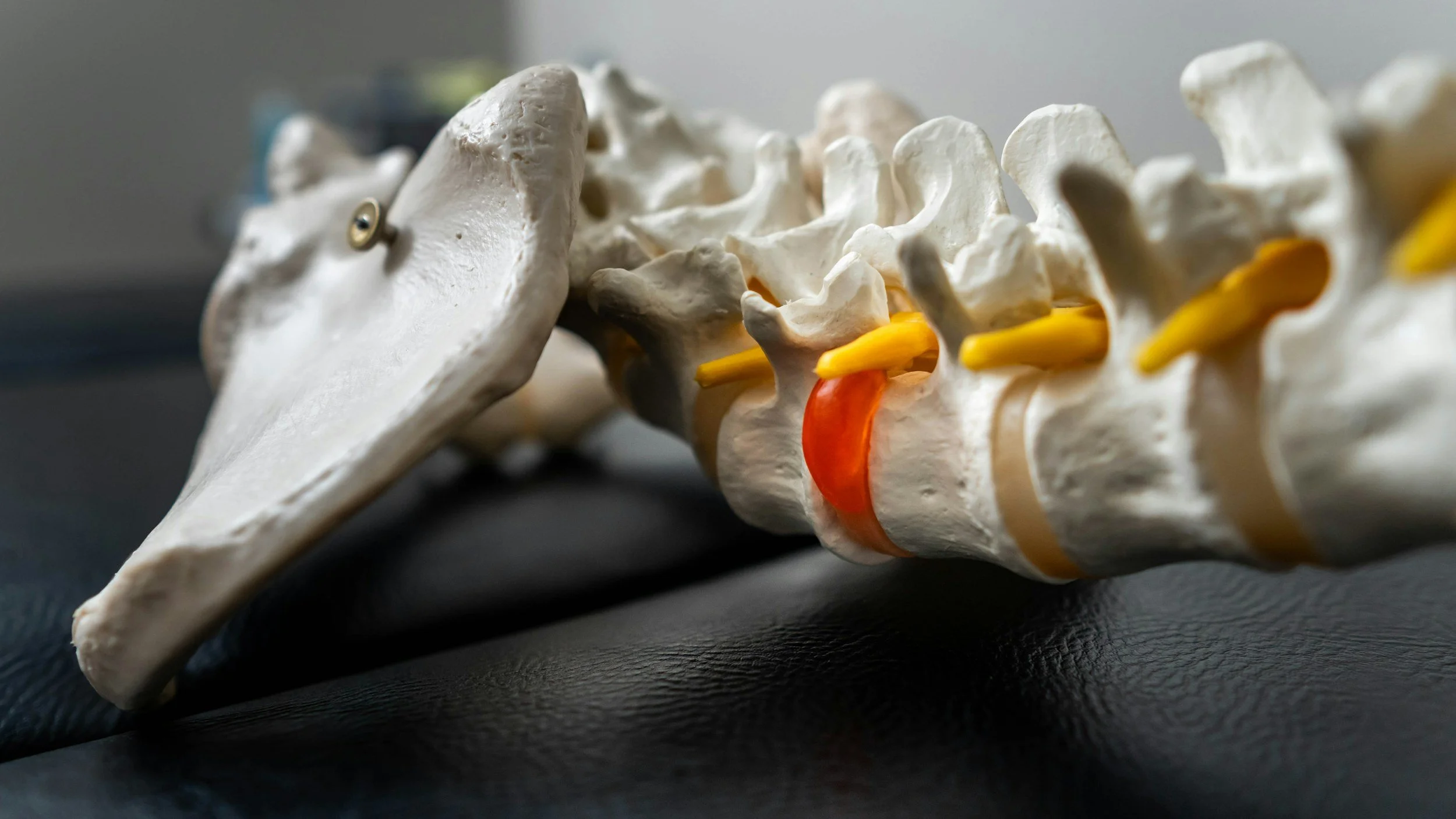
Chronic low back pain is one of the world’s leading causes of disability. It can affect movement, sleep, mood, work, relationships and participation in everyday life. Although back pain can sometimes be traced to a particular disease or injury, it is may also be influenced by several interacting factors rather than by a single damaged disc, joint, or muscle.[1–3]
Effective care usually begins with a careful assessment, understandable information, continued activity and individualised rehabilitation. Medicines or procedures may sometimes be considered, but no treatment works for everyone. The aim is to improve function, confidence and quality of life while avoiding investigations and treatments that are unlikely to help.[2,3]
WHAT IS CHRONIC LOWER BACK PAIN?
Lower back pain is pain felt between the lower aspect of the thoracic area and ribs and the buttock creases, with or without pain extending into the legs. It is generally considered chronic when it persists or recurs for more than 3 months.[2]
Lower back pain is a symptom rather than a single disease. It is helpful to distinguish several broad patterns:
Chronic primary or non-specific low back pain: No single disease, injury or structural abnormality adequately explains the pain. “Non-specific” does not mean that the pain is imaginary or unimportant. It means the pain cannot be confidently attributed to a single structure.
Nerve-related pain: Irritation or compression of a spinal nerve root can cause pain extending into the leg, commonly called sciatica or radicular pain. Tingling, numbness or weakness may also occur.
Low back pain caused by a specific condition: Examples include vertebral fracture, traumatic facet arthropathy or disc injury, infection, cancer, inflammatory spinal disease or another identifiable disorder requiring condition-specific treatment.
Across lower back pain presentations, up to 90% are classified as non-specific. Mixed patterns are common, particularly among people with longstanding symptoms.[2,5]
WHY CAN LOWER BACK PAIN PERSIST?
Persistent back pain frequently does not reflect a single “broken part,” “disc bulge,” or “arthritis”. Several mechanisms may overlap.
Tissue-related pain
Discs, facet joints, sacroiliac joints, muscles, ligaments and other tissues can contribute to pain. Loading, physical capacity, previous injury, inflammation and degenerative change may all be relevant.
However, findings such as disc degeneration, disc bulges and facet-joint arthritis also become increasingly common with age in people who do not have back pain. A scan, therefore, needs to be interpreted alongside the person’s symptoms, examination, and clinical history rather than treated as a pain measurement.[4]
Nerve-related pain
A disc prolapse, narrowing around a nerve or another spinal condition may irritate a nerve root. This can produce leg-dominant pain, altered sensation or weakness. Nerve-root pain has a different treatment pathway from isolated low back pain.
Increased sensitivity of the pain system
In some people, persistent pain is accompanied by increased sensitivity within the nervous system. Pain may become more easily triggered, spread beyond its original area or remain severe despite relatively modest tissue findings.
This is sometimes described as central sensitisation or altered pain processing. It is one possible contributor—not a universal explanation for chronic back pain—and cannot be diagnosed from pain duration, an MRI or a questionnaire alone.[5]
Psychological, social and health factors
Sleep disruption, stress, depression, anxiety, fear of movement, difficult work demands, financial pressure and loss of valued roles can influence pain intensity, disability and recovery. Smoking, low physical activity and other health conditions may also be relevant.
Recognising these factors does not imply that pain is “psychological” or the person’s fault. A biopsychosocial approach simply recognises that pain is shaped by interacting biological, psychological and social influences and that treatment should address whichever factors are important for the individual.[2,3]
WHEN BACK PAIN NEEDS URGENT ASSESSMENT
Serious causes of low back pain are uncommon, but some symptoms require urgent medical assessment.
Seek urgent or emergency care for:
New difficulty passing urine, loss of bladder or bowel control, or numbness around the genitals, buttocks or inner thighs.
New or rapidly worsening leg weakness, particularly if it affects both legs.
Severe back pain following significant trauma.
Back pain accompanied by marked systemic illness, collapse or other concerning acute symptoms.
Prompt medical review is also important when back pain occurs with:
Fever, a recent serious infection, intravenous drug use or significant immune suppression.
A history of cancer, unexplained weight loss or progressively worsening unexplained pain.
Osteoporosis, prolonged corticosteroid use or trauma that could have caused a fracture.
New neurological symptoms or a substantial change from the person’s usual pain.
A red flag is a reason for further assessment, not proof that a serious condition is present. This list is also not exhaustive.[3,7]

ASSESSMENT AND THE ROLE OF SCANS
A good assessment considers more than pain intensity. It may include:
The location, pattern and duration of pain.
Leg symptoms, sensation, strength and reflexes.
Aggravating and easing factors.
Previous injuries, treatments and medical conditions.
Sleep, mood, physical activity, work and social circumstances.
The activities the person most wants to regain.
MRI, CT or X-ray imaging may be important when a fracture, infection, cancer, inflammatory condition, significant nerve compression or another specific problem is suspected. Imaging may also be appropriate when the result is likely to change a specialist treatment decision.
Routine or repeated imaging is not usually helpful for otherwise uncomplicated low back pain. Common age-related findings can be alarming when presented without context and may not identify the structure responsible for pain.[3,4,7]
THE FOUNDATION OF TREATMENT
For most people with chronic primary or non-specific low back pain, treatment should begin with an active and individualised plan rather than prolonged rest or repeated passive treatment.[2,3,6]
Education and shared decision-making
Understanding what has—and has not—been found during assessment can reduce uncertainty and support informed choices. Useful education should acknowledge that the pain is real while explaining that pain intensity is not always a direct measure of tissue damage.
Treatment goals might include walking further, sitting more comfortably, sleeping better, returning to work or resuming family and recreational activities. These goals are often more useful than pursuing a particular pain score alone.[2,3]
Movement and exercise
Continued activity and structured exercise are central components of chronic low back pain care. Depending on the person, a program may include walking, aerobic conditioning, strengthening, mobility work, movement retraining or mind–body exercise.
No single form of exercise is best for everybody. The program should be safe, acceptable, progressively adjusted and sustainable. Temporary discomfort during rehabilitation does not necessarily indicate injury, although significant or unexpected symptom changes should be assessed.[2,6]
Psychologically informed care
Cognitive behavioural therapy, acceptance-based approaches and psychologically informed physiotherapy may help people manage pain-related distress, fear, avoidance and loss of confidence. These approaches are particularly relevant when pain is disrupting sleep, mood, relationships, work or participation. Depression, anxiety, post-traumatic stress disorder (PTSD) and other psychiatric conditions are more common in people with chronic pain.
Psychological or psychiatric treatment does not suggest that the pain is imagined. Psychological strategies provide practical skills for responding to pain and reducing its control over daily life.[2] Psychiatric treatments may be necessary to address significant co-occurring mood disorders, anxiety and PTSD.
Sleep, general health and work participation
Sleep problems, reduced fitness, smoking, weight-related health concerns and difficult occupational demands may need to be addressed as part of the overall plan. Workplace modification, graded return to duties or occupational rehabilitation may be appropriate when pain is interfering with employment.[2,3]
Medicines
Medicines usually have a supporting rather than central role.
A short course of a non-steroidal anti-inflammatory drug may be considered when medically appropriate, using the lowest effective dose for the shortest practical period. These medicines are not suitable for everyone and can affect the stomach, kidneys, heart, blood pressure or other medications.
Long-term opioid therapy is not routinely recommended for chronic primary low back pain because average benefits are limited and risks increase with continuing exposure. Benzodiazepines are also not a routine treatment for chronic back pain. Other medicines may be considered when there is a separate indication, such as a particular neuropathic pain condition, but should not be prescribed simply because pain has persisted.[2,6,7]
WHEN MIGHT AN INTERVENTIONAL PROCEDURE BE CONSIDERED?
Procedures are not first-line treatment for most chronic primary or non-specific low back pain. They may be discussed when:
The pain pattern and assessment suggest a reasonably specific target.
Appropriate non-procedural treatment has been attempted but important functional limitations remain.
The proposed procedure addresses the person’s actual pain pattern—for example, nerve-root treatment for leg-dominant radicular pain rather than isolated back pain.
The likely benefits, uncertainties, alternatives, costs and risks have been discussed.
There are agreed goals and a plan for measuring the result.
A procedure should not be recommended solely because a scan shows degeneration, arthritis or a disc bulge.
WHY THE EVIDENCE ABOUT PROCEDURES CAN APPEAR CONFLICTING
Recommendations are not uniform.
The current NICE guideline, reviewed in July 2026, advises against spinal injections for isolated low back pain. It nevertheless retains a pathway in which lumbar medial-branch radiofrequency denervation may be considered after unsuccessful non-surgical care, a clinically suspected medial-branch pain source and a positive diagnostic medial branch block. NICE considers epidural local anaesthetic and steroid injections for acute and severe sciatica, rather than chronic isolated back pain.[7]
The appropriate conclusion is therefore not that every procedure is effective—or that no individual can benefit. It is that benefits should not be overstated, diagnosis and technical quality matter, responses vary, and treatment decisions should be made through careful selection and informed consent.
FACET JOINT PAIN, MEDIAL BRANCH BLOCKS AND RADIOFREQUENCY ABLATION
Facet joints are small paired joints at the back of the spine. They may contribute to localised low back or buttock pain, sometimes extending into the thigh.
Symptoms, examination findings and imaging cannot reliably confirm facet-joint pain on their own. Arthritis seen on a scan does not establish that the joint is painful.[8]
Medial branch blocks
The medial branch nerves carry sensory information from the facet joints. During a diagnostic medial branch block, a small amount of local anaesthetic is placed near these nerves, usually under X-ray guidance.
The person then monitors whether their familiar pain and relevant activities improve during the expected period of anaesthetic action. A clear temporary response may support the facet joints as an important pain source and help estimate whether radiofrequency treatment is reasonable.
A positive block is not a perfect test. False-positive and false-negative results occur, and clinical services differ in the number of blocks performed and the level of relief they require before proceeding.[8]
Lumbar medial branch radiofrequency ablation
Radiofrequency ablation—also called radiofrequency neurotomy or rhizotomy—uses pulsed radiowaves or heat generated at the tip of a specialised needle to interrupt pain transmission through selected medial branch nerves. It is generally performed under image guidance as a day procedure.
Some procedure-specific guidelines and reviews support radiofrequency treatment in carefully selected people who have responded to diagnostic blocks. Other sham-controlled evidence reviews have found smaller or uncertain average effects. It is therefore inappropriate to quote one general success percentage to all patients.[8,9,12–14]
Radiofrequency treatment does not reverse arthritis, repair a disc or strengthen the back. When it helps, benefit is often temporary—commonly measured in months to 1-2 years—because the nerves can recover. Repeat treatment may be considered after a previously meaningful improvement, and after the diagnosis and overall treatment plan is further reviewed.
EPIDURAL STEROID INJECTIONS
Epidural injections place medication into the space around spinal nerves. They are most relevant when nerve-root inflammation is producing prominent leg pain, rather than for isolated chronic low back pain.
The injection may be delivered through a transforaminal, interlaminar or caudal approach, depending on the anatomy and clinical circumstances.
A Cochrane review found that epidural corticosteroid injections probably produce small average improvements in leg pain and disability over the short term in lumbosacral radicular pain. The average effects were below thresholds that many patients and clinicians would consider clinically important, although individual responses can be greater.[10]
An epidural injection therefore should not be described as a cure for a disc prolapse or spinal degeneration. In a selected person, periods of relief may sometimes assist sleep, mobility or participation in rehabilitation. Further injections should generally depend on documented meaningful benefit, the evolving diagnosis and consideration of cumulative steroid exposure and procedural risk.
SACROILIAC JOINT PROCEDURES
The sacroiliac joint complex connects the pelvis to the sacrum. Pain arising from this region is often felt in the buttock or lower back and may extend into the thigh.
Diagnosis usually requires a combination of history, several physical provocation tests and consideration of competing lumbar or hip conditions. Imaging alone is often insufficient. An image-guided diagnostic injection may be used when the diagnosis remains clinically plausible and the result would influence treatment.
An intra-articular steroid injection or radiofrequency treatment of the sacral lateral branches may be considered in selected cases. Recent international consensus guidance supports diagnosis-specific selection but also acknowledges limitations in the quality and consistency of the evidence.[11]
SPINAL CORD STIMULATION AND OTHER ADVANCED TREATMENTS
Spinal cord stimulation is an implanted neuromodulation treatment rather than a simple injection. It should not be presented as routine treatment for chronic primary or non-specific low back pain.
A 2023 Cochrane review found that available placebo-controlled evidence did not demonstrate sustained benefit sufficient to outweigh the costs and risks for low back pain.[15] Other reviews comparing stimulation with conventional medical management have reached more favourable conclusions, illustrating the continuing effect of comparator choice, study design and patient selection on the apparent result.
In Australia, a post-listing review was underway in 2026 because of uncertainty about comparative clinical effectiveness, cost-effectiveness and long-term adverse effects.[16] SCS may still be discussed for particular complex or neuropathic pain presentations that require a separate multidisciplinary assessment, psychological and functional evaluation, a trial process, and detailed discussion of implantation, device failure, infection, lead movement, revision, and explantation.[15,16]
Surgery and treatments directed at vertebral fractures, infection, inflammatory disease, cancer or significant neural compression follow separate, condition-specific pathways. They should be considered separately from treatment for chronic non-specific low back pain.
BENEFITS, LIMITATIONS AND MEANINGFUL OUTCOMES
Before any procedure, the patient and clinician should agree on what would count as a worthwhile result. Specific outcomes or goals of treatment may include:
Walking, standing or sitting for longer.
Improved sleep.
Greater participation in rehabilitation.
Returning to work or valued activities.
Reduced need for medication.
A meaningful reduction in pain with acceptable adverse effects.
A temporary reduction in pain can be valuable, but it should not automatically be assumed that the procedure has corrected an underlying structural problem. Similarly, a change in pain score without a reduction in medication, improved function, or quality of life may not justify repeating the intervention.
Procedures work best as one part of an overall plan rather than as repeated stand-alone responses to recurring pain. If a treatment does not produce the agreed benefit, the diagnosis and plan should be reconsidered rather than automatically repeating or escalating the intervention.
PROCEDURAL RISKS AND PREPARATION
Risks vary according to the procedure, spinal level, imaging approach, medications used, sedation, the person’s health and the clinician’s technique.
Possible short-term effects include:
Soreness, bruising or a temporary flare of pain.
Temporary numbness or weakness.
Headache, dizziness or nausea.
Flushing, sleep disturbance, mood change or a temporary rise in blood glucose following corticosteroid exposure.
Less common or rare complications can include infection, bleeding or haematoma, allergic reaction, unintended injection into a blood vessel, dural puncture headache, nerve injury and complications associated with sedation or anaesthesia. A procedure may also provide no benefit.
Patients should tell the procedural team about anticoagulants or antiplatelet medicines, diabetes medicines, allergies, pregnancy, active infection, implanted electrical devices and other significant medical conditions. Blood-thinning medication should never be stopped without an individual plan agreed with the prescribing clinician and procedural team.
Fasting, transport and post-sedation requirements depend on the planned procedure and anaesthetic arrangements. Patients should follow the specific instructions issued by their treating service rather than relying on generic online instructions.
After a procedure, urgent assessment may be required for persistent new weakness or numbness, loss of bladder or bowel control, saddle numbness, fever, increasing redness or swelling, significant bleeding, severe headache or other unexpected deterioration.
A REALISTIC ROADMAP
A sound plan for chronic low back pain usually involves five steps:
Check for serious or specifically treatable causes.
Understand the pain pattern, contributing factors and the activities being lost.
Develop an active rehabilitation and self-management plan.
Add medicines or a targeted procedure only when there is a reasonable indication and a favourable balance of likely benefit, burden and risk.
Measure the outcome and discontinue treatments that are not providing worthwhile benefit.
Recovery does not always mean eliminating every sensation of pain. It may mean restoring strength, confidence, sleep, independence, work capacity and participation while reducing the extent to which pain controls everyday life.
No treatment outcome can be guaranteed. Nevertheless, a careful diagnosis, an active treatment plan, including medications and procedures where indicated, realistic expectations, and periodic review can help many people make meaningful progress.
General information only: This article provides general health information and does not replace individual medical assessment or advice. Treatment suitability, benefits and risks differ between people. Seek urgent medical assistance for new bladder or bowel dysfunction, saddle numbness, progressive weakness or other concerning acute symptoms.
Evidence review completed: 15 August 2026.
REFERENCES
GBD 2021 Low Back Pain Collaborators. Global, regional, and national burden of low back pain, 1990–2020, its attributable risk factors, and projections to 2050: a systematic analysis of the Global Burden of Disease Study 2021. Lancet Rheumatology. 2023;5:e316–e329. doi:10.1016/S2665-9913(23)00098-X.
World Health Organization. WHO guideline for non-surgical management of chronic primary low back pain in adults in primary and community care settings. Geneva: WHO; 2023.
Australian Commission on Safety and Quality in Health Care. Low Back Pain Clinical Care Standard. Sydney: ACSQHC; 2022.
Brinjikji W, Luetmer PH, Comstock B, et al. Systematic literature review of imaging features of spinal degeneration in asymptomatic populations. AJNR American Journal of Neuroradiology. 2015;36:811–816. doi:10.3174/ajnr.A4173.
Farley T, et al. Chronic low back pain: history, symptoms, pain mechanisms, and treatment. Life. 2024;14:812. doi:10.3390/life14070812.
Zhou T, Salman D, McGregor AH. Recent clinical practice guidelines for the management of low back pain: a global comparison. BMC Musculoskeletal Disorders. 2024;25:344. doi:10.1186/s12891-024-07468-0.
National Institute for Health and Care Excellence. Low back pain and sciatica in over 16s: assessment and management. NICE guideline NG59. Published 2016; last reviewed and updated 29 July 2026.
Cohen SP, Bhaskar A, Bhatia A, et al. Consensus practice guidelines on interventions for lumbar facet joint pain from a multispecialty, international working group. Regional Anesthesia and Pain Medicine. 2020;45:424–467. doi:10.1136/rapm-2019-101243.
Láinez Ramos-Bossini AJ, Jiménez Gutiérrez PM, Ruiz Santiago F. Efficacy of radiofrequency in lumbar facet joint pain: a systematic review and meta-analysis of placebo-controlled randomised trials. La Radiologia Medica. 2024;129:794–806. doi:10.1007/s11547-024-01809-8.
Oliveira CB, Maher CG, Ferreira ML, et al. Epidural corticosteroid injections for lumbosacral radicular pain. Cochrane Database of Systematic Reviews. 2020;4:CD013577. doi:10.1002/14651858.CD013577.
McCormick ZL, Hurley RW, Anitescu M, et al. Consensus practice guidelines on sacroiliac joint complex pain from a multispecialty, international working group. Regional Anesthesia and Pain Medicine. Published online 2025. doi:10.1136/rapm-2025-107387.
Busse JW, Genevay S, Agarwal A, et al. Commonly used interventional procedures for non-cancer chronic spine pain: a clinical practice guideline. BMJ. 2025;388:e079970. doi:10.1136/bmj-2024-079970.
Wang X, Martin G, Sadeghirad B, et al. Common interventional procedures for chronic non-cancer spine pain: a systematic review and network meta-analysis of randomised trials. BMJ. 2025;388:e079971. doi:10.1136/bmj-2024-079971.
Duszynski B, Rittenberg JD, et al. Multisociety response to the BMJ publications on interventional spine procedures for chronic back and neck pain. Interventional Pain Medicine. 2025.
Traeger AC, Gilbert SE, Harris IA, Maher CG. Spinal cord stimulation for low back pain. Cochrane Database of Systematic Reviews. 2023;3:CD014789. doi:10.1002/14651858.CD014789.pub2.
Australian Government Department of Health, Disability and Ageing. Spinal cord stimulators—Prescribed List post-listing review. Updated 2026.